The World of the Frost Birds
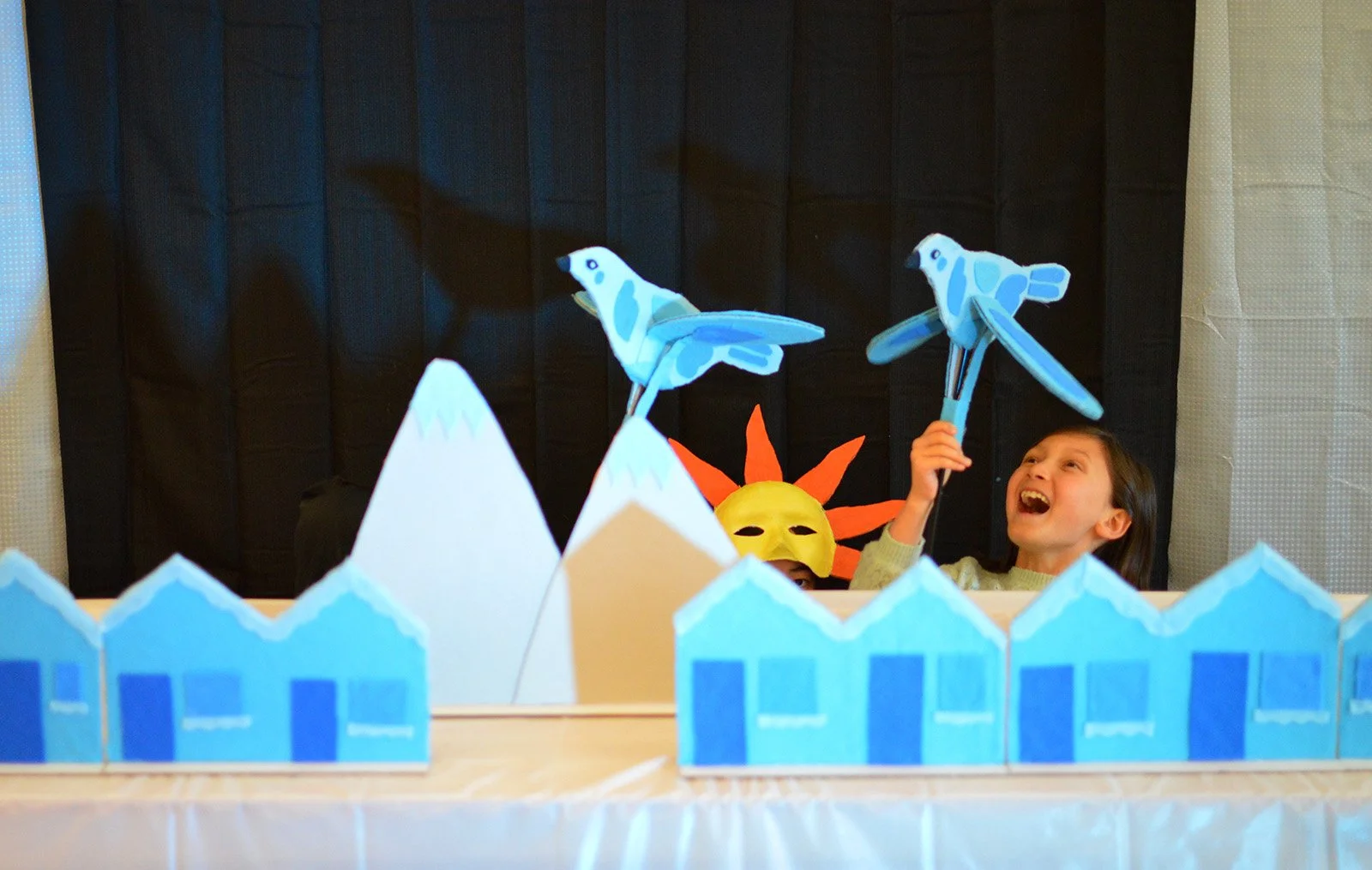
Some of the best teaching moments come out of nowhere. When I introduced the stage setup for our Frost Birds theme, one student looked at the row of handmade houses lining the front of the stage and asked why they were all the same colour. Another wondered why the backdrop was plain black instead of something icy or wintry. My ego somehow survived this brutal, vicious attack, and I was able to respond without tears. Actually, both were respectful and constructive questions. They showed that the children were considering colour, detail, and the reasoning behind design choices. These are aspects of the production process I want them to question and think about.
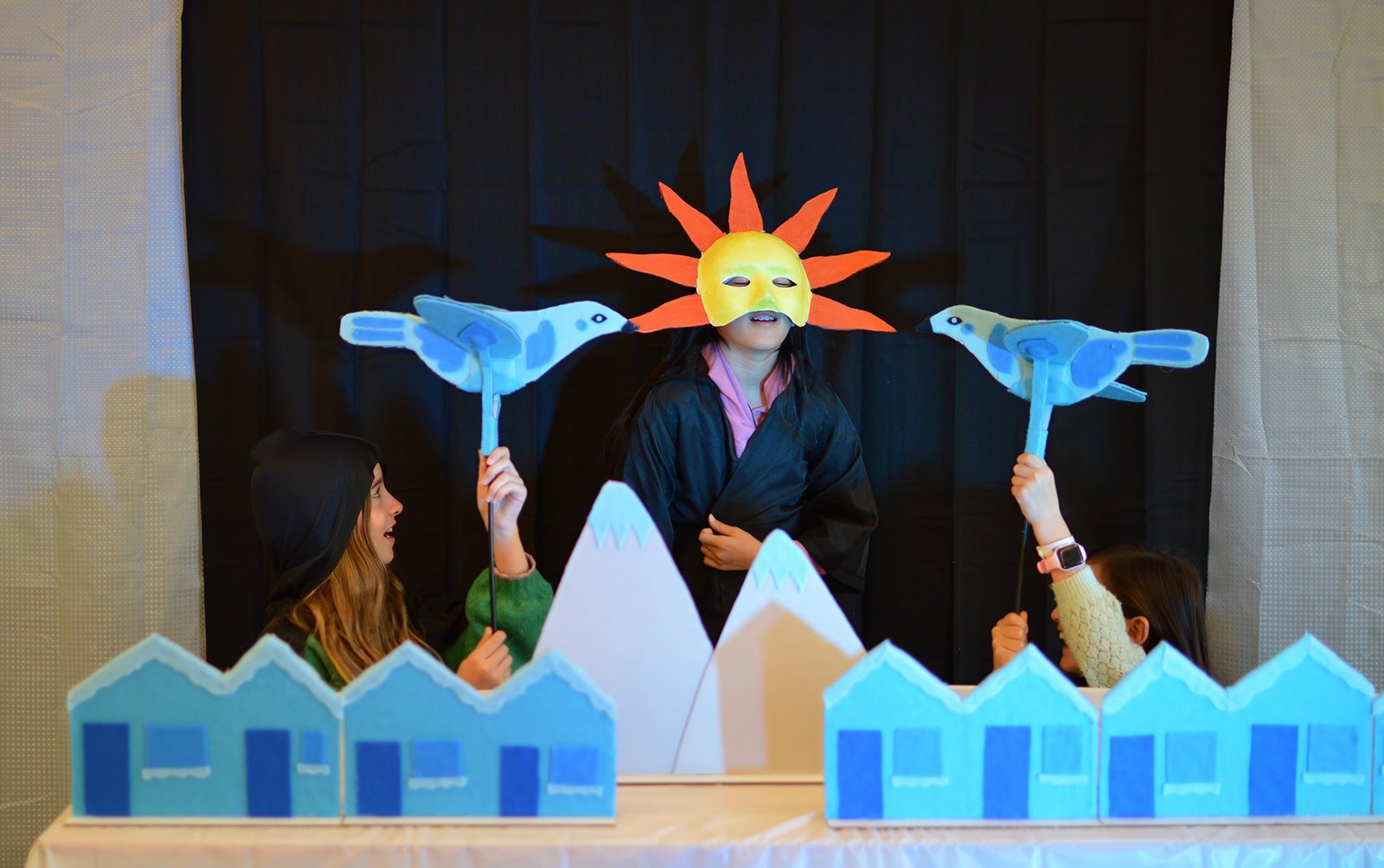
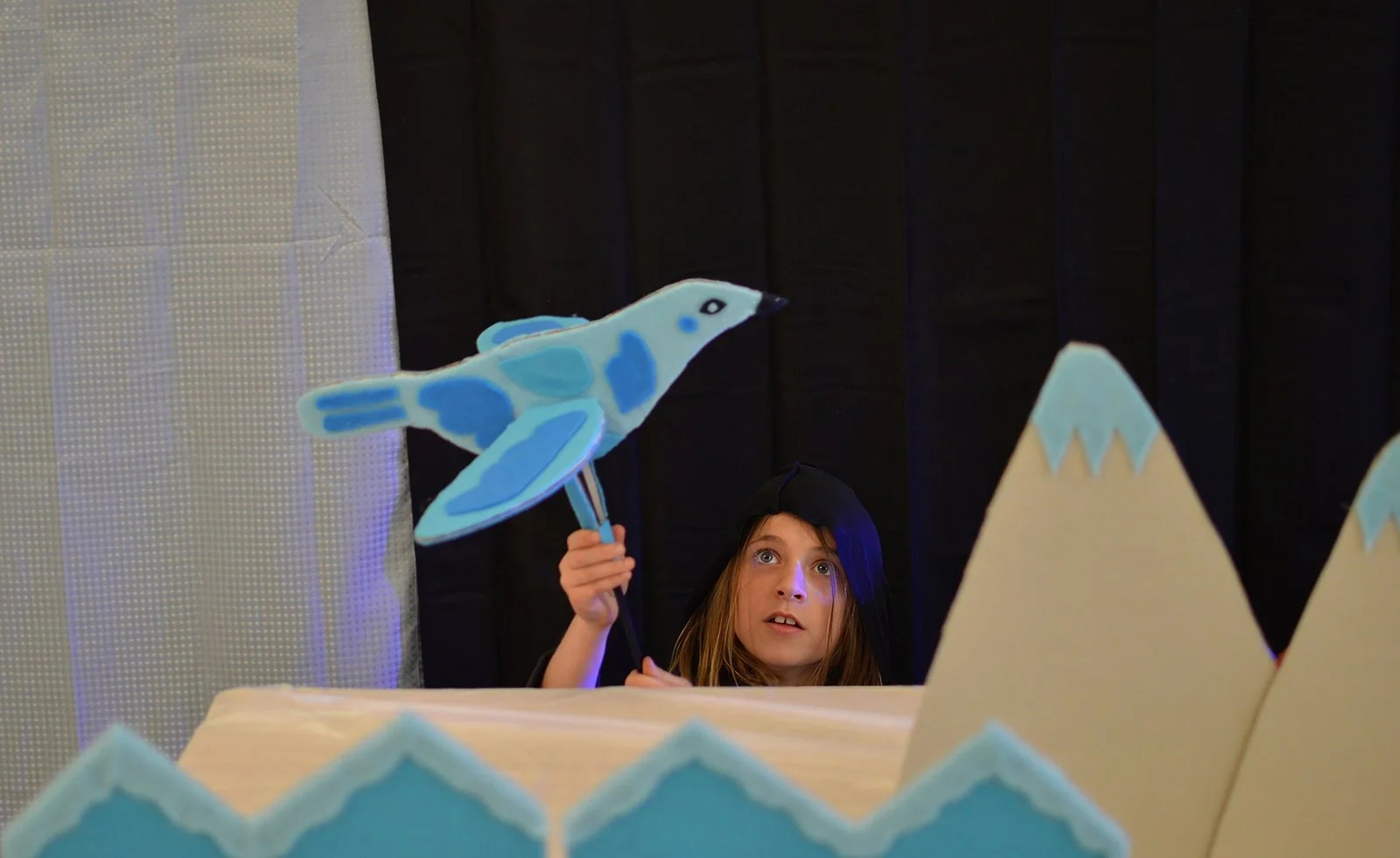
The houses, mountains, and backdrop were all designed and built specifically for this theme. The blue tones across the houses were intentional, unified shapes in cool, simple shades to suggest a frosty village. When the student mentioned the doors could be different colours, I explained the thinking behind keeping them the same. The houses are there to support the story, not to be the focal point. Too much detail or colour shifts the audience’s attention away from the characters and story unfolding above.
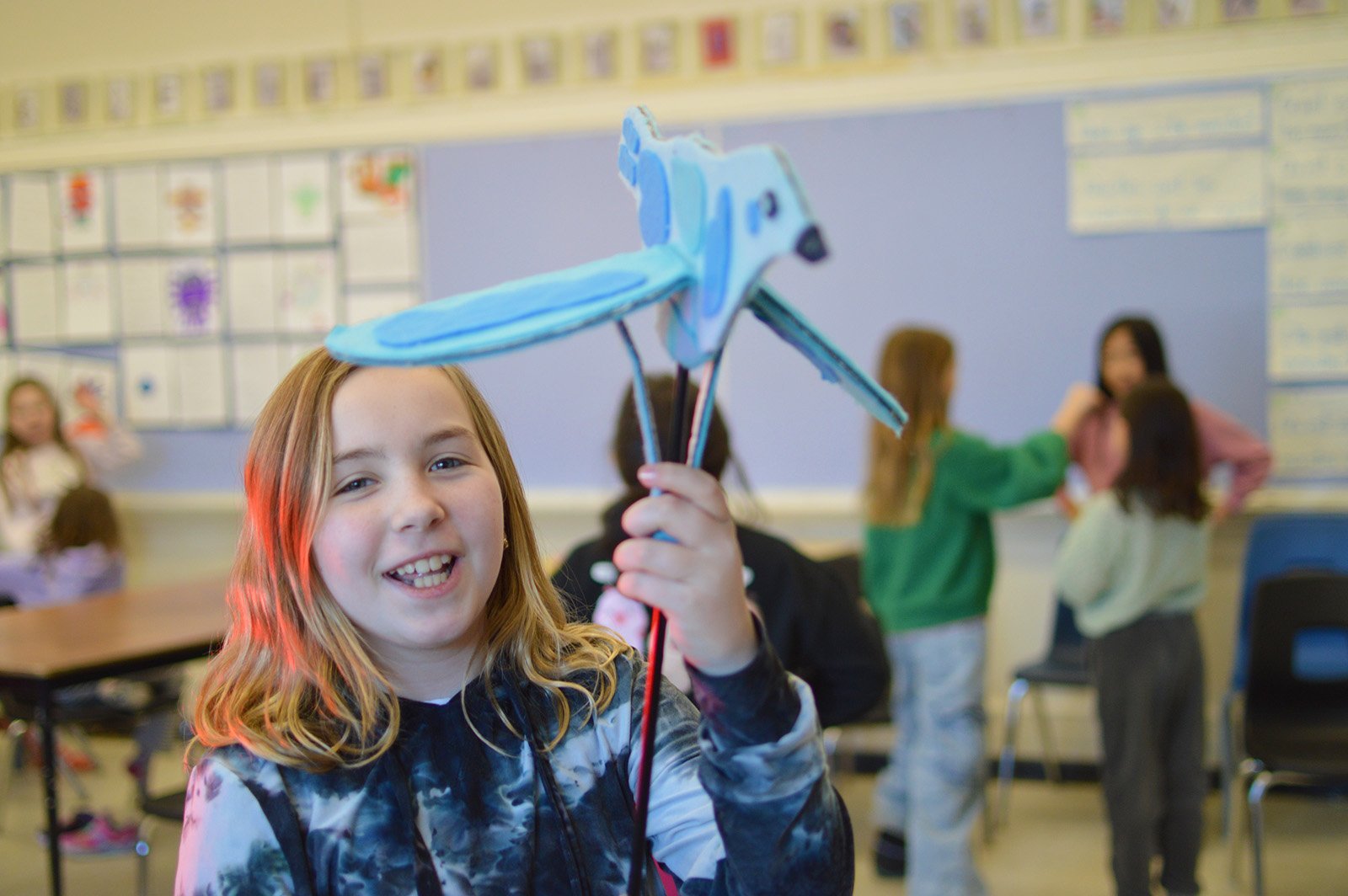
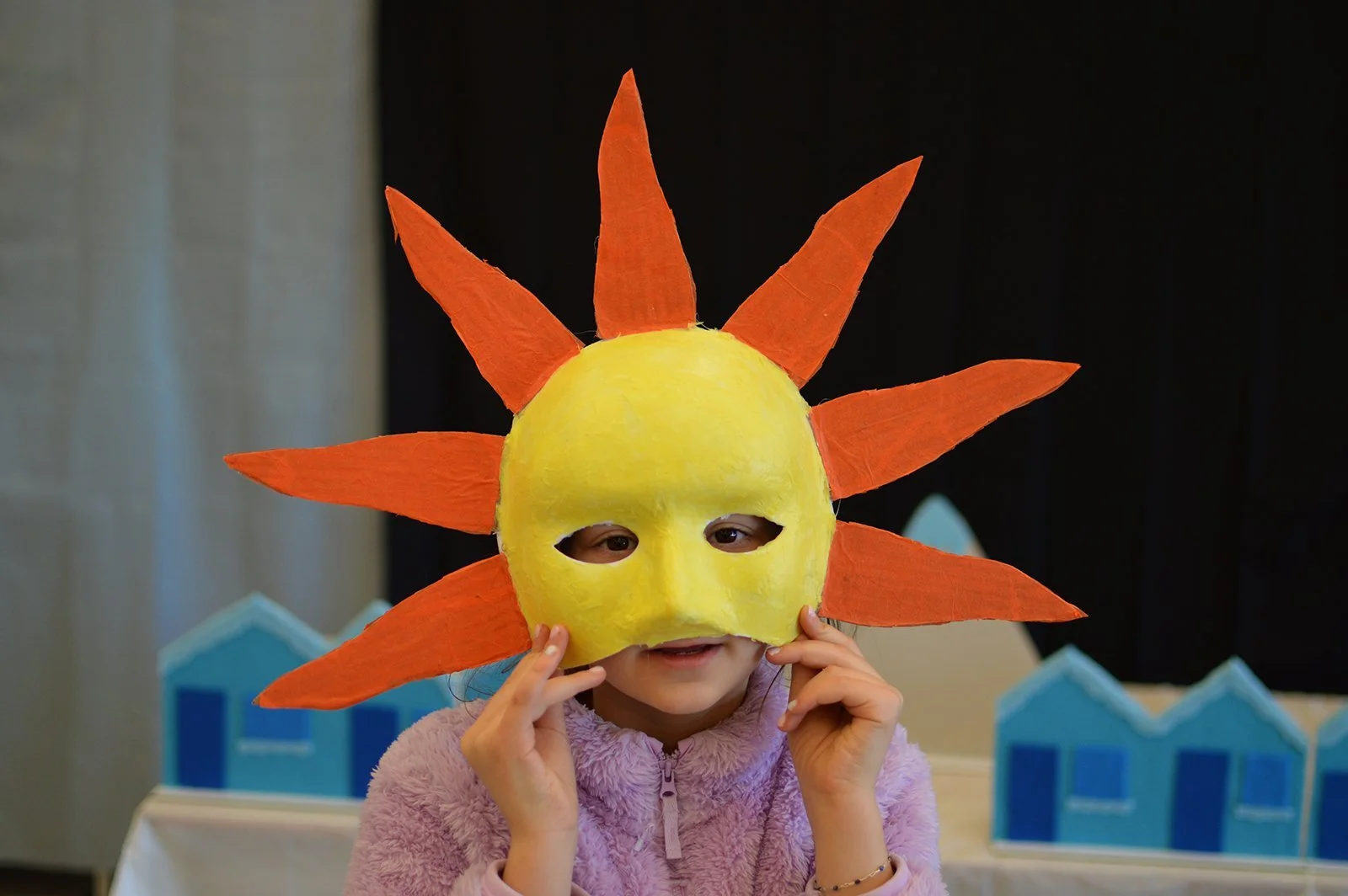
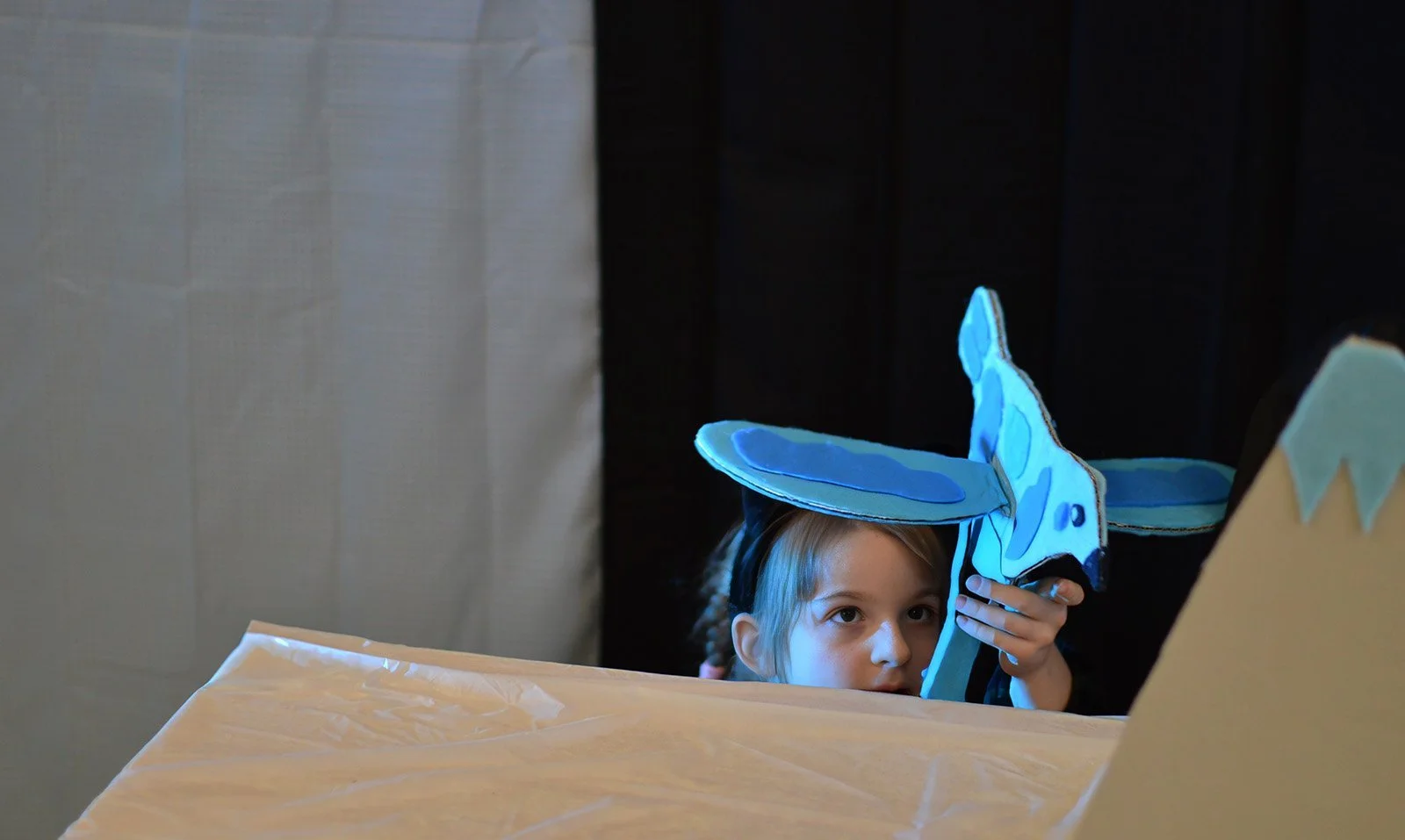
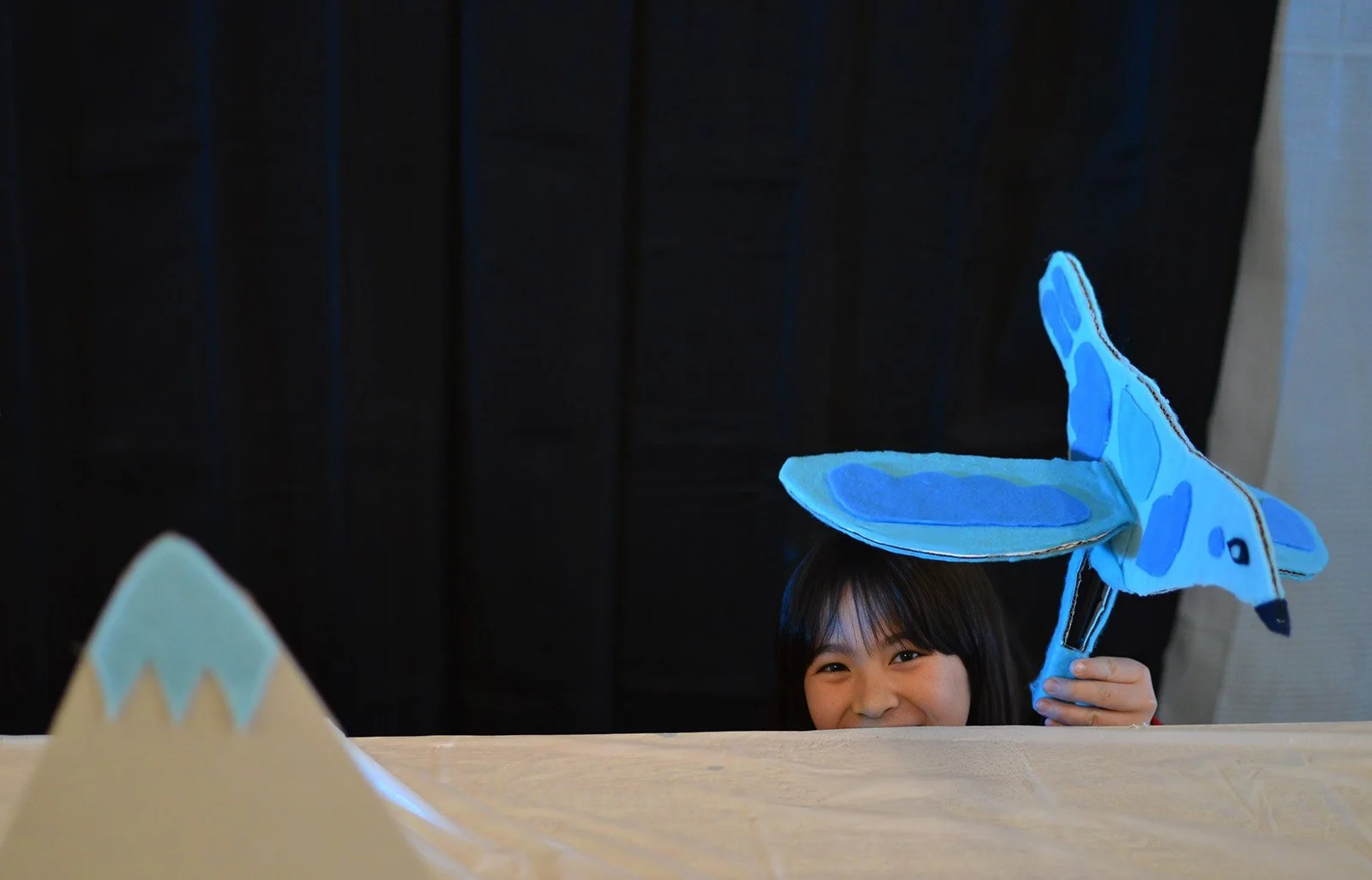
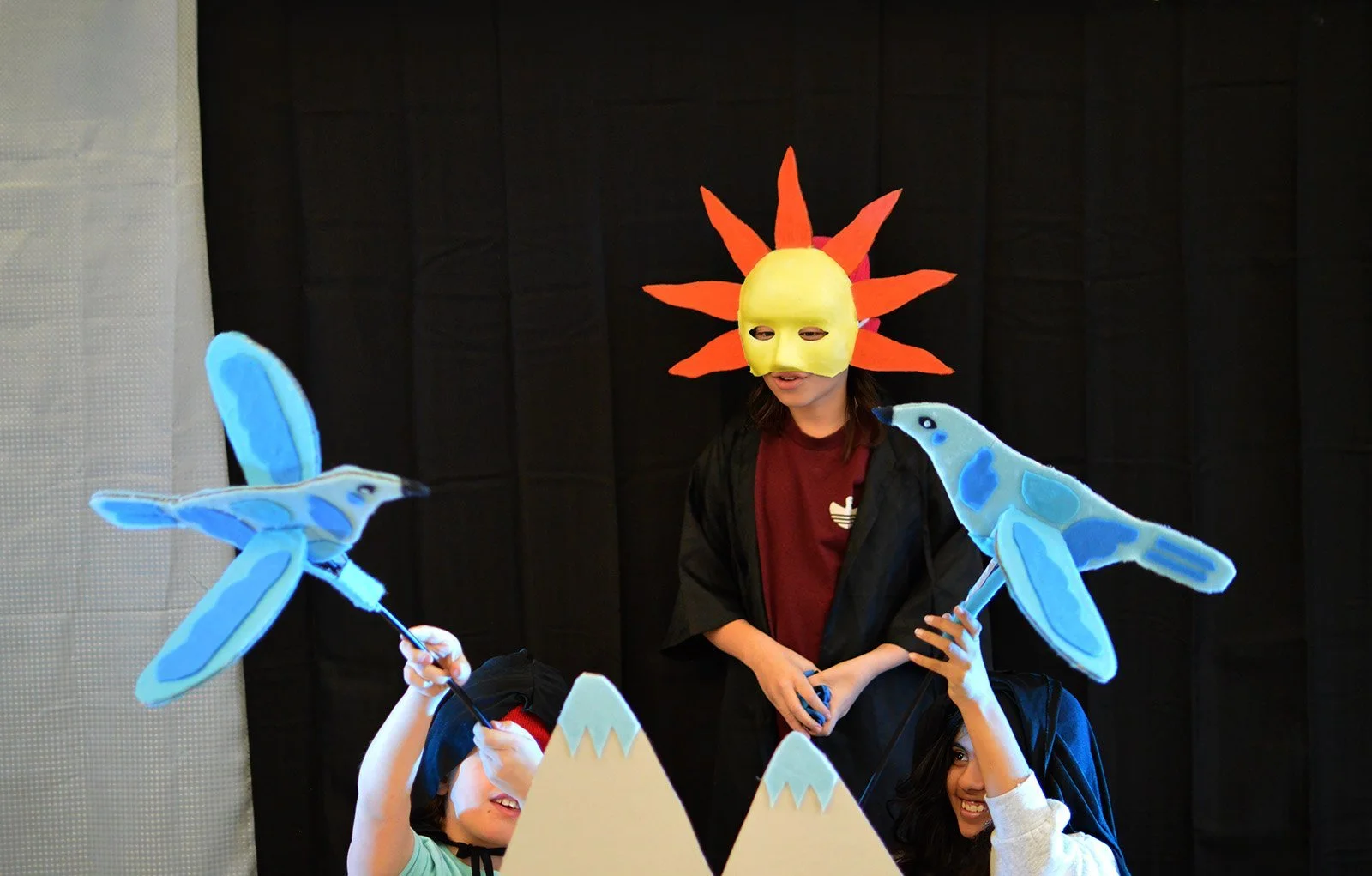
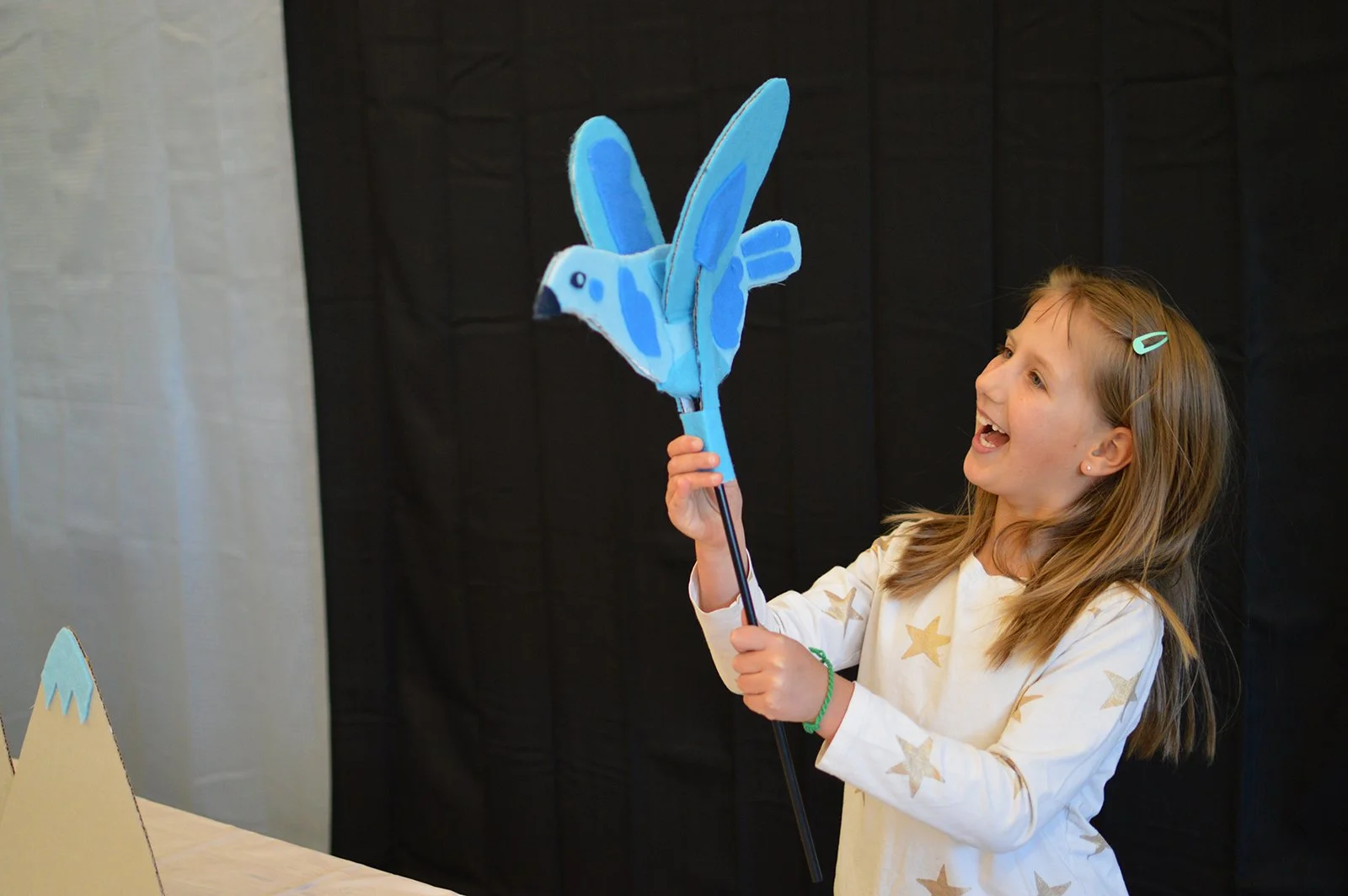
Using a plain black background came from the same kind of thinking. The student playing the sun wore a black robe so their body would disappear, leaving only the sun mask visible, as if it were floating. The frost bird puppets popped the same way. A frosty or detailed background might have looked the part, but sharing the same colour palette, the frost birds would have blended in, pulling attention away from the characters.
These moments open up a conversation about visual storytelling that children don’t always get to have. Every decision on a stage has a reason behind it, and when children start to see that, it changes how they think about what they’re building.